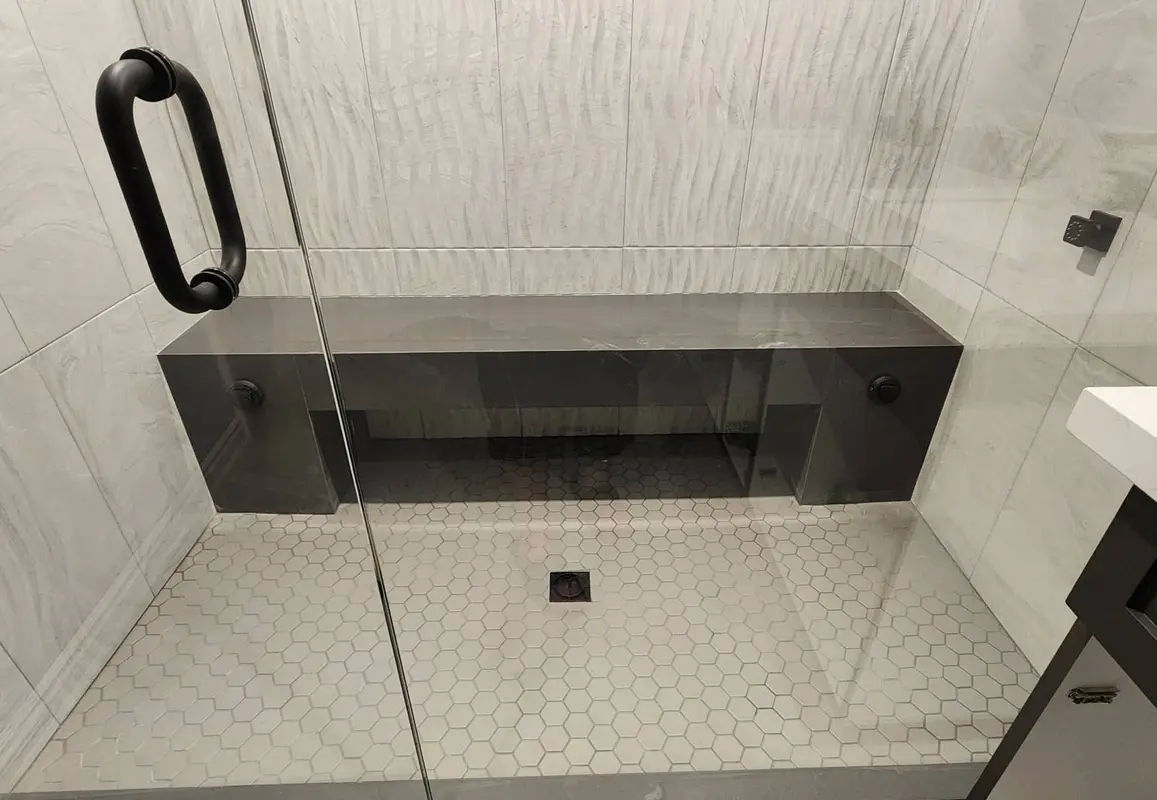
What is a Floating Shower Bench?
A floating shower bench is a modern and elegant addition to any walk-in shower, designed to provide comfort, accessibility, and convenience. Unlike traditional built-in shower benches, it is wall-mounted, giving it a sleek, suspended appearance. This design creates an open and airy aesthetic, making even small showers feel more spacious.
These are commonly constructed from waterproof materials like tile, stone, or teak wood. These benches are typically supported by brackets, such as the Better Bench system, or triangle brackets, ensuring both durability and safety. Whether you are designing a new shower or upgrading an existing one, a floating shower can elevate the entire bathroom experience.
Benefits of a Floating Shower Bench
Enhances Space & Accessibility
It is an excellent space-saving solution. Since it doesn’t extend to the floor, it allows for easier cleaning and a less cluttered look. The open area beneath the bench makes it easier for water to drain properly, preventing mold and mildew buildup. It also provides enhanced shower accessibility, making it a great option for individuals with mobility challenges.
Aesthetic & Luxury Appeal
A well-designed wall-mounted shower seat creates a spa-like shower design that enhances relaxation. Whether you choose a teak shower bench for warmth or a tile shower bench for a seamless look, the floating bench blends beautifully with modern frameless shower designs. Pairing it with glass shower doors further elevates the luxurious appeal of your bathroom.
Best Materials for a Shower Bench
Tile vs. Wood: Which is Best?
- Tile Shower Bench: Durable, waterproof, and easy to customize. Tiles blend seamlessly with your existing shower design but may feel cold to sit on.
- Teak Shower Bench: Naturally water-resistant, warm to the touch, and offers a beautiful, organic look. However, it requires regular maintenance to prevent mold.
Acrylic vs. Stone Bench Tops
- Acrylic Shower Base & Bench: Lightweight, easy to install, and resists staining and mildew growth.
- Stone (Marble, Granite, Quartz): Adds luxury and durability but may need sealing to maintain its longevity.
Installation Considerations & Support Systems
Choosing the Right Floating Bench Support (Brackets vs. Invisibolts)
- Triangle Bracket: Traditional and highly durable, providing strong support for heavier materials like stone or concrete.
- Invisibolts: Designed for a sleek, seamless look while maintaining high weight capacity, making them an ideal choice for minimalist designs.
Waterproofing & Mold Prevention for Shower Benches
Ensuring a waterproof membrane is correctly installed is essential. Proper waterproofing prevents water from seeping behind the bench, reducing the risk of mold growth. Using grout sealers for tile shower benches and periodic oiling for teak shower benches can extend their longevity.
ADA Compliance & Accessibility Features
ADA-Compliant Shower Bench Guidelines
According to the Americans with Disabilities Act (ADA), an ADA-compliant shower bench must be:
- At least 17 inches to 19 inches high from the shower floor.
- At least 15 inches deep for proper seating comfort.
- Able to support at least 250 pounds.
Showerhead Placement for Accessibility
Placing a handheld showerhead within reach of the floating bench ensures ease of use for seated users. A well-positioned shower niche can also help keep bath products accessible without requiring excessive movement.
Walk-In Shower Bench Design Ideas
Space-Saving Corner Shower Seat
A corner shower seat is an excellent option for compact spaces. It maximizes utility while preserving floor space, making it ideal for bathroom remodels with limited square footage.
Creating a Spa-Like Experience with Shower Seating
Pairing a floating bench with elements like glass shower doors, soothing color palettes, and aromatherapy candles can transform your shower into a relaxing retreat. Consider using freestanding teak benches to add a natural touch.
How to Maintain & Clean a Shower Bench
Regular Cleaning Tips
- For tile benches, use a mild cleaner and a soft brush to remove soap scum.
- For teak benches, apply a protective oil regularly to maintain water resistance.
Preventing Mold & Mildew
- Ensure proper ventilation in your shower to reduce humidity.
- Wipe down the bench after each use to prevent moisture buildup.
Alternatives
Comparing Built-in vs. Freestanding Shower Benches
- Built-in Shower Bench: Permanent, waterproof, and ideal for custom showers.
- Freestanding Teak Bench: Movable, stylish, and requires no installation.
Frequently Asked Questions
Is a floating shower bench safe?
Yes! When installed with proper floating bench support like Better Bench brackets or triangle brackets, these benches can safely hold significant weight.
Can I add a floating shower bench to an existing shower?
Yes, but it requires reinforcing the wall structure to support the bench properly. It’s best done during a bathroom remodel.
What’s the best waterproof shower bench material?
Stone and tile are highly durable, while teak provides warmth and a natural aesthetic. Acrylic shower bases are lightweight and easy to maintain.
How much weight can a floating shower bench hold?
Most floating shower, when installed with Better Bench or similar support, can hold up to 400 pounds, depending on the material and bracket system used.
Can a floating bench be used in a small shower?
Yes! A corner shower seat or a narrow floating bench is ideal for small showers, offering seating without compromising space.
A shower bench is a stylish, functional, and space-efficient upgrade for any modern shower. With proper support, materials, and waterproofing, it can enhance both the aesthetics and accessibility of your bathroom for years to come.
